I found this You Tube channel today - One Minute Physics - brilliant.
The clips below (typically 1-2 minutes long) are relevant to HSC Physics (particularly QTQ). While they are designed for 'the person in the street' they go beyond what is strictly required by the HSC syllabus but they are excellent for filling in the gaps and answering the questions that crop up about quantum mechanics (sorry about the messy links - no time to tidy them up)
Neutrino - http://www.youtube.com/watch?v=lAAmAbJvvJg&feature=plcp
Schrodingers cat: http://www.youtube.com/watch?v=IOYyCHGWJq4&feature=plcp
Wave/Particle #1: http://www.youtube.com/watch?v=Q_h4IoPJXZw&feature=plcp
Wave/Particle #2: http://www.youtube.com/watch?v=_riIY-v2Ym8&feature=plcp
Standard Model I: Intro http://www.youtube.com/watch?v=HVO0HgMi6Lc&feature=plcp
Standard model II: PEP http://www.youtube.com/watch?v=Fxeb3Pc4PA4&feature=plcp
Standard Model III: Bosons: http://www.youtube.com/watch?v=3_RhISgoXUs&feature=plcp
Standard Model IV: Higgs pt 1
http://www.youtube.com/watch?v=9Uh5mTxRQcg&feature=plcp
Standard modle V: Higgs pt 2:
http://www.youtube.com/watch?v=ASRpIym_jFM&feature=plcp
Extra stuff - further beyond (but linked to) the syllabus
Spacetime – ARRGGGHH brain hurt: http://www.youtube.com/watch?v=s5S-hA9uKEM&feature=plcp
GPS and relativity: http://www.youtube.com/watch?v=ky4RgRvVDoA&feature=plcp
Einstein’s famous 1905 papers: Photoelectric Effect: http://www.youtube.com/watch?v=hSgIDgGpRpk&feature=plcp
Einstein’s famous 1905 papers: special relativity: http://www.youtube.com/watch?v=ajhFNcUTJI0&feature=plcp
Einstein’s famous 1905 papers: E=mc2: http://www.youtube.com/watch?v=hW7DW9NIO9M&feature=plcp
Einstein’s famous 1905 papers: atoms: http://www.youtube.com/watch?v=nrUBPO6zZ40&feature=relmfu

Saturday, 14 July 2012

Wednesday, 4 July 2012
Standard Model
It looks like the discovery of the Higgs Boson is going to be confirmed tonight. The standard model is the last focus area of the QTQ elective and thus you should probably know about it.
It would be VERY good to read the following - you don't need to memorise anything at this stage - but being AWARE of what the Standard model is would be very good.
1) From the Sydney Morning Herald - a surprisingly good video explanation: http://www.smh.com.au/technology/sci-tech/weve-observed-a-new-particle-leaked-video-reveals-apparent-god-particle-confirmation-20120704-21g63.html
2) An outstanding website - read all the links down the left (each one is a small PowerPoint like page) - covers A LOT of the QTQ elective http://www.particleadventure.org/standard-model.html
It would be VERY good to read the following - you don't need to memorise anything at this stage - but being AWARE of what the Standard model is would be very good.
1) From the Sydney Morning Herald - a surprisingly good video explanation: http://www.smh.com.au/technology/sci-tech/weve-observed-a-new-particle-leaked-video-reveals-apparent-god-particle-confirmation-20120704-21g63.html
2) An outstanding website - read all the links down the left (each one is a small PowerPoint like page) - covers A LOT of the QTQ elective http://www.particleadventure.org/standard-model.html
3) A brief summary http://superstringtheory.com/experm/exper2.html
4) The standard model summarised into a picture - http://www.pha.jhu.edu/~dfehling/particle.gif
5) & two articles about 'where to next' http://www.wired.com/wiredscience/2012/07/supersymmetry-explained/ & http://www.huffingtonpost.co.uk/theo-le-bret/higgs-boson-beyond-the-standard-model_b_1641492.html
6) My attempt at a mind map summary of the QTQ elective - you should be able to follow the top half - the bottom half is what is coming up. Click on the pic for the big version or you can find the original (and the website where I made it - its a free login and very easy to use) - here
4) The standard model summarised into a picture - http://www.pha.jhu.edu/~dfehling/particle.gif

5) & two articles about 'where to next' http://www.wired.com/wiredscience/2012/07/supersymmetry-explained/ & http://www.huffingtonpost.co.uk/theo-le-bret/higgs-boson-beyond-the-standard-model_b_1641492.html
6) My attempt at a mind map summary of the QTQ elective - you should be able to follow the top half - the bottom half is what is coming up. Click on the pic for the big version or you can find the original (and the website where I made it - its a free login and very easy to use) - here

7) Below is a very interesting video on how the Large Hadron Collider (LHC, ie The Synchrotron at CERN) works.
Here is another 'general population' clip about it
Here are three about what happens during a collision. The 'hairy' looking second & third videos are actually tracks of the paths of all the new matter (particles) created during two real collisions between lead ions at an energy of 574 TeV. That they can make those tiny ions collide at that speed/energy is incredible, that such collions actually MAKE new matter is amazing, that they can detect and track it all at such high speed and in such short timeframes blows my mind.
The clips below aren't the best quality - (its the best I could upload to the blog) for the full experience see here (though you should watch the second one on the page first, then the top one).
9) And while we are on the topic of QTQ - you should probably look at this too: http://drblurg.blogspot.com.au/2011/08/cloud-chambers-qtq.html
Thursday, 21 June 2012
The End of Term 2
Thank you for a great term and for introducing me to –
The HSC Teachers’ Term 2 Lament (Thanks to CollegeHumour)
Now and then I think of all the things I’ve taught you.
Every handout with a Far Side cartoon apropos.
You don’t want to live that way.
Forgetting every word I say.
You said you’d never let it go.
I guess mnemonic devices just weren’t enough for you though*
You really ‘disappoint me somewhat’
I worked so hard to teach you something and now you don’t know nothing.
What does the conch symbolise?
Or anything beyond the first three digits of pi?
And what about SOHCAHTOA?
Or asexual reproduction of a protozoa?
I guess you didn’t need that though.
Now it’s just a study that you used to know.
* ie Solo hated mangoes so had to eat monkey nuts for water – or whatever…
But on that topic - tonight I did some research on the scale of the universe site and I have the proof I was looking for:


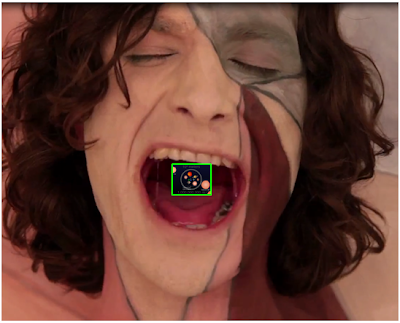
Keep the questions, summaries, essays, everything coming throughout the holidays. I don’t want to get bored. Actually I’m bored already hence this ridiculous post. So, get to it!
And Physicists - make sure you watch the two clips on the previous post.
And to finish the term – some more sesame street with one of the greatest voices today (song at 1:15):

The HSC Teachers’ Term 2 Lament (Thanks to CollegeHumour)
Now and then I think of all the things I’ve taught you.
Every handout with a Far Side cartoon apropos.
You don’t want to live that way.
Forgetting every word I say.
You said you’d never let it go.
I guess mnemonic devices just weren’t enough for you though*
You really ‘disappoint me somewhat’
I worked so hard to teach you something and now you don’t know nothing.
What does the conch symbolise?
Or anything beyond the first three digits of pi?
And what about SOHCAHTOA?
Or asexual reproduction of a protozoa?
I guess you didn’t need that though.
Now it’s just a study that you used to know.
* ie Solo hated mangoes so had to eat monkey nuts for water – or whatever…
But on that topic - tonight I did some research on the scale of the universe site and I have the proof I was looking for:


Keep the questions, summaries, essays, everything coming throughout the holidays. I don’t want to get bored. Actually I’m bored already hence this ridiculous post. So, get to it!
And Physicists - make sure you watch the two clips on the previous post.
And to finish the term – some more sesame street with one of the greatest voices today (song at 1:15):

Saturday, 16 June 2012
Right Now
As you are probably aware - the Science we learn in yr 12 was cutting edge about 100 years ago. For a look at the cutting edge of Chemistry/Physics see these excellent animations below. The first is good for everyone to know about. The second is vital for Yr 12 Physics (QTQ) - NB the comic bit starts at 1 min in. More below the clips for the Physicists.
The clips below aren't the best quality - (its the best I could upload to the blog) for the full experience see here (though you should watch the second one on the page first, then the top one).
Also see here, here & here for Newton's Laws as they apply to Science students (to make it more relevant to you, you could replace graduation/thesis/PhD with 'completing an assessment', and grad student with 'HSC student')
BTW PhD (piled higher and deeper) Comics is a very clever & very funny site - though you might appreciate it more once you've had a taste of university life.
As the 2nd clip implied, it's interesting to compare modern Particle Physicists to the Chemists of 100 years ago trying to piece together the periodic table. What they are putting together now is the 'Standard Model' - which is like a Periodic Table of subatomic particles. It is incredible to think of the advances in Chemistry that have come about since the ordering of the elements and developing a deeper understanding of their structure. One can only image where a greater understanding of the subatomic world will take us.
The clips below aren't the best quality - (its the best I could upload to the blog) for the full experience see here (though you should watch the second one on the page first, then the top one).
Also see here, here & here for Newton's Laws as they apply to Science students (to make it more relevant to you, you could replace graduation/thesis/PhD with 'completing an assessment', and grad student with 'HSC student')
BTW PhD (piled higher and deeper) Comics is a very clever & very funny site - though you might appreciate it more once you've had a taste of university life.
As the 2nd clip implied, it's interesting to compare modern Particle Physicists to the Chemists of 100 years ago trying to piece together the periodic table. What they are putting together now is the 'Standard Model' - which is like a Periodic Table of subatomic particles. It is incredible to think of the advances in Chemistry that have come about since the ordering of the elements and developing a deeper understanding of their structure. One can only image where a greater understanding of the subatomic world will take us.
Friday, 15 June 2012
IN-YOUR-FACE DRAFTS!!!!!!!!!!!!!!!!!1
225 is a big number
I challenge you to have the patience to sit down and write out every number from 1 to 225
225 is a big number
But it is a shame that 225 is fifteen squared and not twelve squared because this song (courtesy of old-school Sesame Street) sums up exactly how I feel right now.
This is in the Blurg top-ten songs of all time
& BTW - it should be compulsory by law to say 11 like they do at 1:33 in the clip
& UPDATE - ditto for '10' at 0:35
Wednesday, 23 May 2012
Transistors and Breakthroughs
Just clarifying some stuff from today - the valves (thermionic devices) we saw are now replaced by semiconductors (solid state devices) - one of the most recent Radeon graphic cards has a Graphics Processing Unit (GPU) with 4.3 billion transistors in ~350 square millimetres. That is approaching 12 million transistors per square millimetre.
If that GPU was made out of the smallest valves we saw in class today it would cover an area of about 1 square kilometre.
And - because I want to keep pushing you into a Science based career (photonics, quantum computing, fusion power...) here are the links to those articles we discussed today:
Red photons to yellow photon for solar cells here
The universe sized computer made of 300 atoms here
And a comic (LOL-worthy, for me anyway) about quantum computing (from here originally)

If that GPU was made out of the smallest valves we saw in class today it would cover an area of about 1 square kilometre.
And - because I want to keep pushing you into a Science based career (photonics, quantum computing, fusion power...) here are the links to those articles we discussed today:
Red photons to yellow photon for solar cells here
The universe sized computer made of 300 atoms here
And a comic (LOL-worthy, for me anyway) about quantum computing (from here originally)

Thursday, 17 May 2012
Khan Academy for Prelim and HSC Physics
The Khan Academy is an online educational resource with short (up to 10 minute) lectures on different topics. Below are the Khan Academy videos relevant to Preliminary & HSC Physics.
So - if you didn't quite get something in the last two years and you want it explained again,
Or - if you want some extra worked examples for numerical calculations
Or - you want to hear things explained in a new way,
I recommend you watch the videos below.
But please, no matter how well-intentioned, please don't say "Thanks, I never understood xxxxx before - but now I do thanks to those videos" - even though I will be really happy for you, my professional pride will be wounded.
THE WORLD COMMUNICATES
QUANTA TO QUARKS
So - if you didn't quite get something in the last two years and you want it explained again,
Or - if you want some extra worked examples for numerical calculations
Or - you want to hear things explained in a new way,
I recommend you watch the videos below.
But please, no matter how well-intentioned, please don't say "Thanks, I never understood xxxxx before - but now I do thanks to those videos" - even though I will be really happy for you, my professional pride will be wounded.
THE WORLD COMMUNICATES
- Introduction to Waves
- Amplitude, Period, Frequency and Wavelength of Periodic Waves
- Introduction to the Doppler Effect
- Specular and Diffuse Reflection
- Specular and Diffuse Reflection 2
- Refraction and Snell's Law
- Refraction in Water
- Snell's Law Examples 1
- Snell's Law Example 2
- Total Internal Reflection
- Electrostatics (part 1): Introduction to Charge and Coulomb's Law
- Electrostatics (part 2)
- Electric Potential Energy
- Voltage
- Circuits (part 1)
- Circuits (part 2)
- Circuits (part 3)
- Circuits (part 4)
- Introduction to Magnetism
- Introduction to Vectors and Scalars
- Calculating Average Velocity or Speed
- Solving for Time
- Displacement from Time and Velocity Example
- Acceleration
- Newton's First Law of Motion
- Newton's Second Law of Motion
- Newton's Third Law of Motion
- Airbus A380 Take-off Time
- Airbus A380 Take-off Distance
- Why Distance is Area under Velocity-Time Line
- Average Velocity for Constant Acceleration
- Acceleration of Aircraft Carrier Takeoff
- Race Cars with Constant Speed Around Curve
- Deriving Displacement as a Function of Time, Acceleration and Initial Velocity
- Visualizing Vectors in 2 Dimensions
- Normal Force and Contact Force
- Normal Force in an Elevator
- Inclined Plane Force Components
- Ice Accelerating Down an Incline
- Force of Friction Keeping the Block Stationary
- Correction to Force of Friction Keeping the Block Stationary
- Force of Friction Keeping Velocity Constant
- Introduction to Momentum
- Momentum: Ice skater throws a ball
- 2-dimensional momentum problem
- 2-dimensional momentum problem (part 2)
- Introduction to work and energy
- Work and Energy (part 2)
- Conservation of Energy
- Work/Energy problem with Friction
- Scale of Earth and Sun
- Scale of Solar System
- Scale of Distance to Closest Stars
- Scale of the Galaxy
- Intergalactic Scale
- Hubble Image of Galaxies
- Big Bang Introduction
- Radius of Observable Universe
- (Correction) Radius of Observable Universe
- Red Shift
- Cosmic Background Radiation
- Cosmic Background Radiation 2
- Cosmological Time Scale 1
- Cosmological Time Scale 2
- Birth of Stars
- Becoming a Red Giant
- White and Black Dwarfs
- Hubble's Law
- Lifecycle of Massive Stars
- Supernova (Supernovae)
- Supernova clarification
- Black Holes
- Introduction to Gravity
- Mass and Weight Clarification
- Viewing g as the value of Earth's Gravitational Field Near the
- Gravity for Astronauts in Orbit
- Would a Brick or Feather Fall Faster
- Normal Force and Contact Force
- Normal Force in an Elevator
- Plotting Projectile Displacement, Acceleration, and Velocity
- Projectile Height Given Time
- Deriving Max Projectile Displacement Given Time
- Impact Velocity From Given Height
- Visualizing Vectors in 2 Dimensions
- Projectile at an Angle
- Different Way to Determine Time in Air
- Launching and Landing on Different Elevations
- Total Displacement for Projectile
- Total Final Velocity for Projectile
- Correction to Total Final Velocity for Projectile
- Centripetal Force and Acceleration Intuition
- Visual Understanding of Centripetal Acceleration Formula
- Loop De Loop Question
- Loop De Loop Answer part 1
- Loop De Loop Answer part 2
- Acceleration Due to Gravity at the Space Station
- Space Station Speed in Orbit
- Introduction to Newton's Law of Gravitation
- Gravitation (part 2)
- Introduction to Torque
- Moments
- Magnetism 2
- Magnetism 3
- Magnetism 4
- Magnetism 5
- Magnetism 6: Magnetic field due to current
- Magnetism 7
- Magnetism 8
- Magnetism 9: Electric Motors
- Magnetism 10: Electric Motors
- Magnetism 11: Electric Motors
- Magnetism 12: Induced Current in a Wire
- Introduction to Magnetism
QUANTA TO QUARKS
Khan Academy for Prelim and HSC Chemistry
The Khan Academy is an online educational resource with short (up to 10 minute)
lectures on different topics. Below are the Khan Academy videos relevant to
Preliminary & HSC Chemistry.
So - if you didn't quite get something in the last two years and you want it explained again,
Or - if you want some extra worked examples for moles (see the Metals unit),
Or - you want to hear things explained in a new way,
I recommend you watch the videos below.
But please, no matter how well-intentioned, please don't say "Thanks, I never understood xxxxx before - but now I do thanks to those videos" - even though I will be really happy for you, my professional pride will be wounded.
THE CHEMICAL EARTH
So - if you didn't quite get something in the last two years and you want it explained again,
Or - if you want some extra worked examples for moles (see the Metals unit),
Or - you want to hear things explained in a new way,
I recommend you watch the videos below.
But please, no matter how well-intentioned, please don't say "Thanks, I never understood xxxxx before - but now I do thanks to those videos" - even though I will be really happy for you, my professional pride will be wounded.
THE CHEMICAL EARTH
- Elements and Atoms
- Introduction to the atom
- Orbitals
- More on orbitals and electron configuration
- Electron Configurations
- Electron Configurations 2
- Valence Electrons
- States of Matter
- States of Matter Follow-Up
- Covalent Networks, Metallic, and Ionic Crystals
- Groups of the Periodic Table
- Periodic Table Trends: Ionization Energy
- Other Periodic Table Trends
- Ionic, Covalent, and Metallic Bonds
- Molecular and Empirical Formulas
- The Mole and Avogadro's Number
- Formula from Mass Composition
- Another mass composition problem
- Balancing Chemical Equations
- Stoichiometry
- Stoichiometry: Limiting Reagent
- Stoichiometry Example Problem 1
- Stoichiometry Example Problem 2
- Limiting Reactant Example Problem 1
- Empirical and Molecular Formulas from Stoichiometry
- Example of Finding Reactant Empirical Formula
- Molecular and Empirical Forumlas from Percent Composition
- Stoichiometry of a Reaction in Solution
- Another Stoichiometry Example in a Solution
- Van Der Waals Forces
- Solubility
- Boiling Point Elevation and Freezing Point Supression
- Introduction to Kinetics
- Reactions in Equilibrium
- Enthalpy
- Heat of Formation
- Hess's Law and Reaction Enthalpy Change
- Enthalpy
- Introduction to Oxidation States
- More on Oxidation States
- Redox Reactions
- Galvanic Cells
- Types of Decay
- Half-Life
- Le Chatelier's Principle
- Introduction to pH, pOH, and pKw
- Acid Base Introduction
- pH, pOH of Strong Acids and Bases
- pH of a Weak Acid
- pH of a Weak Base
- Conjugate Acids and Bases
- Buffers and Hendersen-Hasselbalch
- Acid Base Titration
- Strong Acid Titration
- Weak Acid Titration
- Titration Roundup
Wednesday, 16 May 2012
Einstein and Planck stuff
Every year I get to this dot point (which by then I have forgotten) and the cogs of my brain start turning again and I eventually have some new revelations
This year I'm thinking on these lines:
1) Planck - was science research removed from society? – NO. Science should serve the society of ones nation (nationalist) - in his case Germany (which in war time meant supporting the German war effort).
2) Planck - was Science research removed from politics? – NO. Sscience research should be dictated by political powers to direct the research to serve the nation - the ultimate decision/responsibility about the uses/consequences of the research lay with the political powers.
3) Einstein - was science removed from society? – NO. Science should serve the entirety of humanity - not any particular nation. Scientists had a responsibility to society and had to take responsibility for the consequences of their research.
4) Einstein - was Science research removed from politics? – NO. Scientists had a role in shaping politics and society - they should use their research and findings to sway political and public opinion to better serve all humankind.
Now if I was writing an essay on this I would need to detail what they did in WWI and WWII and provide evidence (in what they did) to support each of my 4 proposals. Which I think I could do.
BUT you might completely disagree with these 4 ideas - THAT IS OK - you can make any claim you like about 'whether science research is removed from social and political forces' - as long as you can construct an argument to support your claim.
Don’t forget to read the semiconductor article here

This year I'm thinking on these lines:
1) Planck - was science research removed from society? – NO. Science should serve the society of ones nation (nationalist) - in his case Germany (which in war time meant supporting the German war effort).
2) Planck - was Science research removed from politics? – NO. Sscience research should be dictated by political powers to direct the research to serve the nation - the ultimate decision/responsibility about the uses/consequences of the research lay with the political powers.
3) Einstein - was science removed from society? – NO. Science should serve the entirety of humanity - not any particular nation. Scientists had a responsibility to society and had to take responsibility for the consequences of their research.
4) Einstein - was Science research removed from politics? – NO. Scientists had a role in shaping politics and society - they should use their research and findings to sway political and public opinion to better serve all humankind.
Now if I was writing an essay on this I would need to detail what they did in WWI and WWII and provide evidence (in what they did) to support each of my 4 proposals. Which I think I could do.
BUT you might completely disagree with these 4 ideas - THAT IS OK - you can make any claim you like about 'whether science research is removed from social and political forces' - as long as you can construct an argument to support your claim.
Don’t forget to read the semiconductor article here
Ahem - despite arguments to the contrary my official title is:
Primo Brick, Round Rattle 1 x 1 with Blue Overalls and Animal Face Pattern
Primo Brick, Round Rattle 1 x 1 with Blue Overalls and Animal Face Pattern

Saturday, 28 April 2012
Physics Animations
Here are some Physics applets to play with to prepare for Ideas to Implementation and Quanta to Quarks.
They are presented in chronological order for the course:
IDEAS TO IMPLEMENTATION
1) Revise what an EM wave is here
2) Learn about standing waves - important for Hertz's experiment - here
3) Learn about blackbody radition by clicking the image below:

4) To learn about the photoelectric effect click here and/or on the image below:

5) Learn more about wave interference here and/or by clicking on the image below:

QUANTA TO QUARKS
1) Learn about Rutherfords alpha scatteirng experiment by clicking on the image below:

2) Learn about Bohr's model of hydrogen by clicking here
3) Learn about further models of hydrogen by clicking the image below:

4) Learn about the Davisson-Germer experiment by clicking the image below:

5) Learn about alpha decay by clicking the image below:

6) Learn about beta decay by clicking the image below:

7) Learn about nuclear fission by clicking the image below:

On the topic of physics animations and games - Minecraft is amazingly cool retro-feel game. I wrote it off as garbage on first appearance but about 100 hours later - I can verify that it is fun and addictive.

What a feeling to be tunnelling deep into the Earth, carefully making my way past a lava pool, and finding my first diamond ore. It was right up there with defeating my first Enderman, getting my first Blaze Rod and killing a Ghast with its own fireball...

They are even making Minecraft LEGO!!!

On the topic of awesome games - a new level of Kingdom Rush has JUST been released on iTunes!

They are presented in chronological order for the course:
IDEAS TO IMPLEMENTATION
1) Revise what an EM wave is here
2) Learn about standing waves - important for Hertz's experiment - here
3) Learn about blackbody radition by clicking the image below:
| Click to Run |
4) To learn about the photoelectric effect click here and/or on the image below:
| Click to Run |
5) Learn more about wave interference here and/or by clicking on the image below:
| Click to Run |
QUANTA TO QUARKS
1) Learn about Rutherfords alpha scatteirng experiment by clicking on the image below:
| Click to Run |
2) Learn about Bohr's model of hydrogen by clicking here
3) Learn about further models of hydrogen by clicking the image below:
| Click to Run |
4) Learn about the Davisson-Germer experiment by clicking the image below:
| Click to Run |
5) Learn about alpha decay by clicking the image below:
| Click to Run |
6) Learn about beta decay by clicking the image below:
| Click to Run |
7) Learn about nuclear fission by clicking the image below:
| Click to Run |
On the topic of physics animations and games - Minecraft is amazingly cool retro-feel game. I wrote it off as garbage on first appearance but about 100 hours later - I can verify that it is fun and addictive.

What a feeling to be tunnelling deep into the Earth, carefully making my way past a lava pool, and finding my first diamond ore. It was right up there with defeating my first Enderman, getting my first Blaze Rod and killing a Ghast with its own fireball...

They are even making Minecraft LEGO!!!

On the topic of awesome games - a new level of Kingdom Rush has JUST been released on iTunes!

Subscribe to:
Posts (Atom)