It was great to see the Chemists and Physicists of the class of 2012 again today.
As I said to those who I managed to speak to - I was made to feel so welcome and had such a great time teaching you this year – thank you for making the year so special.
BUT – I was startled by the revelation that “..I enjoyed your jokesand your sometimes inappropriate humour…” Firstly - Thank you. (I was touched by this and the whole message). Secondly - Woah! - I had gone to great lengths to walk on the right side of clean this year. I can’t think of anything that wasn’t …However, if this is what was being referred to:
I can assure you that anything I said was completely innocent and that any double entendre was a construction of YOUR imaginations!
But on that topic of inappropriate humour, I have recently decided that Bill Burr is one of the funniest comedians I have heard in a long time. The audio track to this video (YouTube link to 'Bill Burr : Let It Go' removed due to inappropriate humour) is great for a car trip (though make sure everyone in the car is over 18 and not easily offended) – and no, there is no way I would post the actual video to the Blurg.
What made me laugh the most was the bit between 7:35 and 7:55 (this is how I felt trying to field some of your questions this year - but I'm not complaining - you have helped me become a better teacher/chemist/physicist).
Best wishes, please keep in touch – I’d love to hear what
you are studying and where your career path takes you.
Q1) When you are asked to compare two things in Chemistry you need to communicate the meaning (definition) of both things AND the similarities & differences between them. Considering that CFC’s are a special subset of haloalkanes it would be easier to define what a haloalkane is and then the comparative definition of the CFC. Eg “Haloalkanes are alkanes (single bonded hydrocarbon chains) that have…. However, CFCS….”
Q2) Don’t forget: you need to use di, tri, tetra etc if there are multiple of a halogen; you need to give the lowest numbers to the FIRST ALPHABETICAL halogen IF there are two equivalent numbering systems; & you need to always name the halogens in alphabetical order.
Eg for the compound below, numbering from either end gives the same set of numbers. So we give the first alphabetical halogen (chlorine) the smallest number - BUT - we still name it in alphabetical order.
So the name is...(highlight the space below to check your answer)
2-chloro-3-fluorobutane
BTW - there is currently a lot of controversy about this at the moment - the above explanation is correct according to IUPAC and RACI but this WAS NOT one of the provided answers to a MC question in the 2012 HSC Chemistry paper. Dr Blurg (& I imagine a lot of other teachers) contacted the BOS about this and they released a statement the essentially admitted their error in early 2013. Go Dr Blurg! Q3) Yes you need to use the correct chemical symbols and include all the hydrogens.
Q4) Make sure you read the question (ie name…) and also see the tips for Q2 above.
Q5) See tips for Q2 and Q4 above.
Q6a) See (general) tips for Q1 above
Q7) The whole 9.4.4 focus area is about how Cl free radicals catalyse ozone decomposition. Thus, when it asks why HCFC’s are being phased out and why HFC’s are preferred you need to make sure that your answer clearly explains this in terms of Cl.
Summary Feedback A) When presenting your rules you need to be thorough. Eg don’t forget to:
* Say what needs to be named alphabetically. * Define the prefixes to use (up to five min). * Define what is meant by ‘lowest total’ numbers. * Specify what has to be done if there are two equivalent numbering systems - Hint it is NOT to give preference to the most electronegative halogen! * Identify where commas and hyphens are needed.
B) In the risk assessment you need to consider why you need to pick up dropped pieces and why you should not use your mouth to separate the models.
C) Make sure you use correct naming when naming your examples and isomers. Don't make it difficult for yourself. Put all the halogens down one end so there is no confusion about the end to name from.
D) Be careful to be exact with your definitions. Eg you need to indicate that in CFC’s chlorine AND fluorine have replaced ALL hydrogen atoms (ie they contain chlorine, fluorine and carbon atoms only). Make sure your example chemical matches the definition.
E) All required structural diagrams must be submitted (hand drawn).
F) For the last question of the Theory section you needed to draw AND name THREE isomers AND the original haloalkane.
G) Isomers have to have exactly the same number of each atom in the molecule.
H) Don't forget to include a specific application of the CFC you chose.
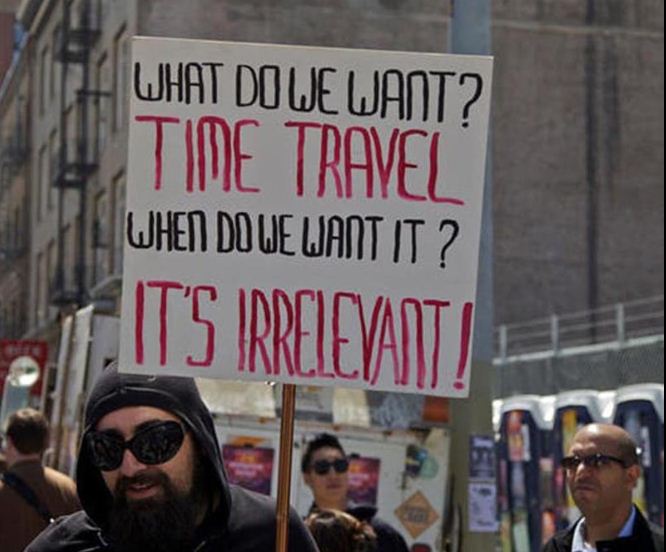
This summary and worksheet was done very well - AND the class got its first 'full-mark' draft - impressive. Just like the comics below!
And as this is the last 'official' post before Christmas - "MERRY CHRISTMAS BLURGLINGS"
Last year, scientists in Mexico have used microscopic polystyrene spheres to model how atoms bond (ie 3D shapes) AND model the polymerisation process. The video below shows the particles behaviour in the modelling experiments and the article found here has a good discussion about the advantages of this type of modelling in Chemistry - ie it relates to Skill 14.1f that we are studying in this experiment.
From our modelling HYDRATION
From our modelling DEHYDRATION
Worksheet Feedback
These tips should help you to correct your worksheet. Relevant number codes are written on your booklet.
Q2 & Q3) The hydroxyl group has its free electron on the oxygen ato so be careful to show the bond between the carbon and hydroxyl actually connecting the C to the O, not the H.
Q4) Boiling and melting are physical changes. They do not involve chemical bonds breaking. They involve INTERMOELCULAR bonds breaking – ie the bonds between molecules. Thus substances that form very strong intermolecular bonds have higher mpt and bpt than substances that form weak intermolecular bonds. In order of strength of intermolecular bonds: Hydrogen bonds > dipole-dipole>weak dispersion. ALSO to compare alkanols and alkanes properly you need to outline the different intermolecular bonding that both can form.
Q5 & Q6) * When talking about solubility you should always say like-dissolves-like, & say whether the solute and solvent are polar or non-polar and then say whether they are soluble or insoluble. For alkanols as the C-chain length increases the hydroxyl group becomes less significant thus the chain is less polar…
* Ethanol has a polar component (OH) and a non-polar component (the alkyl group).
Q6) * Answer the whole question. It is OK to say why ethanol is miscible in water and hexane, but you have to explain why hexane and water are not miscible. NB molecules CAN FORM intermolecular bonds, they cannot ‘have’ or ‘contain’ them.
* There is a big difference between a hydroxide ion and a hydroxyl group. See the first page of our 9.2.3 notes.
Q7 & Q8) * Always draw structural diagrams for carbon compounds (including addition and dehydration reactions) and always include required catalysts and states. The only reactions you DON'T need structural equations for are fermentation & combustion.
Q8) *For alkanes, alkenes and alkynes for 1-4 carbons atoms they are gas, above that they are liquids (eventually solids but we don’t need to worry about that transition). However, because alkanols have hydrogen bonding between their molecules they are liquids (ie methanol, ethanol… are liquids)
* The naming on that sheet was very bad. 8d should have been PROPENE (there is only one isomer = no need for numbers).
* For dehydration you need a concentrated sulfuric acid catalyst, for hydration you need dilute sulfuric acid. Also note that many hydrations and dehydrations can result in two different products. Eg hydration of propene could produce propan-1-ol or propan-2-ol.
* Dehydration will only convert an alkanol to an alkene with the same number of carbons. It will not crack it into ethylene molecules. Eg pentan-1-ol will dehydrate to pent-1-ene.
* Include names remembering the correct naming has the number before the –ol or –ene NOT at the start of the name.
Summary Feedback A) The catalyst for ethanol dehydration is CONCENTRATED sulfuric acid. Hydration of ethylene requires heating it and water in the presence of a DILUTE sulfuric acid catalyst.
B) For the explanations make sure you say why using ethylene to produce ethanol is non sustainable AND why we need renewable sources of ethylene (i.e. why we need ethylene and why making it from ethanol is sustainable). In addition - you must show how ethanol is renewable - ie it is made by fermenting ??? which comes from ??? during ???.
C) Using colours to highlight the species that change positions make it easier to see where the bonds are being broken and remade (i.e. especially the H, OH that are involved in bonding). - BUT YOU MUST USE SOME SORT OF KEY. Eg you might use a circle to indicate hydrogen, but for one that takes part in the reaction you might put a pink mark next to, the other a blue. Thus you can see exactly where these two H atoms go in the reaction.
D) You need to show all the intermediate steps to show how the catalyst reacts to make intermediate products and then reforms. Using arrows (and colours as described in C) will help make this clear. E) You need to include TWO advantages and TWO disadvantages You must refer to BTH the Molymod and the computer animations. A big advantage of this modelling as that it enabled you to see how the catalyst played a role in the reaction! Hints for disadvantage: did it react spontaneously as in real life. Were you bale to model the individual electrons, did the models really show the correct size and position of atoms and bonds…
F) Catalysts increase reaction rate BY reacting with the reactants to produce… At the end of these intermediate steps the catalyst is…
G) It is not enough to say that using HX was simpler. You need to say WHY it was valid to simplify it as HX – you must relate it to what happened in the reaction.
H) Use structural equations & states. NB the ethanol dehydrated starts off as pure ethanol. The ethylene is a gas and being non-polar will not dissolve in the water (ie cannot be aq).
I) Hydration of ethylene does not involve cracking. However, cracking of crude oil fractions was used to produce the ethylene which was then hydrated (in an addition reaction with water) to produce ethanol.
Q1)
*You do not need to know the details of the reactions to make styrene and vinyl chloride but you do need to know the reactants – they are in our notes.
*Styrene is NOT used for insulation (or esky’s, CD cases etc…). However polystyrene is. So you need to say that styrene is used as the monomer for polystyrene and that polystyrene is used for insulation… i.e., is near enough good enough for Chemistry? – see below
Q3)
*It is good that we understand the connection between
But when explaining one of these features - e.g. properties – you must primarily relate it to the factor that directly influences it. Eg properties are determined by structure; uses are determined by properties. SO - when explaining why LDPE is non-crystalline, explain it in terms of its branched structure (if required you can then go and relate this back to production conditions, but the main focus of your explanation should be the connection between structure and properties).
* Cellulose is not water soluble. Paper does break up in water but the cellulose itself is not dissolving. The term that people were looking for is biodegradable (basically able to be eaten by bacteria) cellulose (paper) is but polyethylene is not.
Q4)
Similar to Q3, these are questions about properties so you relate the answers to their structure. It is important that you understand that the further apart chains are, the weaker their inter-chain bonding (intermolecular weak dispersion forces) is. Thus strength and melting points are lower
Q5)
For the last two columns it is important that you link an appropriate PROPERTY to the use. It is no point saying that polystyrene is used for packaging because it is a thermal insulator. Say it is used for thermos insulation because it is a thermal insulator OR say it is low density and tough so used for packaging. It is also important to distinguish between non-expanded and expanded polystyrene when discussing its properties and used (ditto for plasticised and non-plasticised PVC).
PORTFOLIO #2 Feedback on Summaries
Again – very well done – just that I think everyone is still trying to use too many words. I’ll try and give some tips below to help.
NOTE – please use the term ethylene NOT ethene (ethene is the systematic name but the IUPAC name is ethylene)
(A) With the safety you need to say the danger AND specifically how to avoid the danger – ie things you should and shouldn’t do.
(B) In the method the dice rolling modelled the chaotic nature of the addition polymerisation process. You do not need to record the dice roll numbers used. You do need to say that ‘different’ dice rolls resulted in initiation, propagation, termination and backbiting (for LDPE models only).
(C)A free radical is a chemical species that has an unpaired electron (and is thus very reactive). Technically a free radical is a chemical species with an unpaired electron that could be formed by splitting a molecule.
(D) It is important to note that initiation in LDPE is started when the organic peroxide REACTS with the ethylene monomer by breaking the double bond and forming a free radical. HDPE is initiated by the ethylene monomer forming a temporary bond with the catalyst (which could be metallocene or Ziegler Natta), which breaks the double bond and forms a free radical.
(E) Diagrams have to at least be big enough to see. If you got an (E) code they need to increase in size.
(F) To explain the distribution of chain lengths the best phrase I have come across is “The chaotic nature of the polymerisation process means activated chains of different length collide and terminate. Thus producing a polymer with a range of chain lengths”.
(G) Question 6 & 7 need you to EXPLAIN the differences and similarities – I think this is where you can express your understanding more succinctly. Eg Q6 “LDPE and HDPE are both covalent molecular and thus they have no free electrons to conduct electricity. HDPE has linear chains allowing for close crystalline packing and high density. The close packing means there is strong inter-chain bonding and thus HDPE is strong and rigid. LDPE…”
For Q7 you can choose your words carefully to be thorough yet concise. Eg Q7 “LDPE’s branched chains and non-crystalline low density packing mean it is flexible and transparent, making it suitable for cling wrap and plastic bags…”
Remember you DON’T need to detail EVERY application, just a few illustrative examples.
(H) When assessing whether model kits can effectively illustrate formation you need to consider whether they were able to show initiation, propagation and termination. It does not matter whether you think they can or can’t do this effectively as long as you say which and provide a reason.
(I) In general, pictures are useful in chemistry for effective communication. When dealing with complex formulae or concepts, diagram are quicker and easier to prepare (presenter) and understand (audience).
(J) When assessing whether model kits can effectively illustrate properties you need to consider whether they were able to show the (similar and different) physical and chemical properties of the polymers (strength, flexibility, mpt, bpt, conductivity etc).
(K) Not only did you have to say how pictures are useful for communicating chemistry concepts in general – but you also needed to give an example of where they were useful in this experiment (including the summary – perhaps read (L) below for an idea).
(L) You do not need to spend time (and use valuable space) describing initiation, propagation and termination in the text as long as you have properly labelled diagrams (ie see (I) and (K) above).
(M) You cannot explain backbiting properly unless you have four pictures.
(N) Remember – the rules of the assessment are size 10 Arial narrow, single spacing with 1cm margins. You would not want to have a summary inadmissible because of a formatting ‘error’.
(O) You must be specific about which properties are controlled by which bonding. You are not demonstrating understanding if you list a whole lot of properties: eg "They are insulating, insoluble, low mpt, .... this is because they are covalent molecular and have weak dispersion bonds". in such an answer it is not clear which type of bonding controls which property and why. Also NB they are insoluble because they are non polar CM but also because the long chains are tangled together (hard to separate) - this (and the large molecule size) also keeps their mpt and bpt higher than other CM substances as well.
These videos are all do do with the global oil supply and the potential of ethanol.
1) 300 years of fossil fuels
2) ABC Catalyst Peak Oil Report
3) Brazil & ethanol
4) Ethanol's future
5) TEDx - The Physics of renewable energy - is it possible?
6) TED - Transition to a world without oil
7) Arguments against ethanol
8) & this song is about ethanol and is one of the most awesome songs ever - it is a shame that learning to sing this is not part of the HSC Chemistry course
b) The chemicals immediately after mixing - are there any differences?
Cyclohexane and Br-water (immediate)
Cyclohexene and Br-water (immediate)
c) The mixtures after 10, 15 and 20 minutes
Cyclohexane (a) &
Cyclohexene (e)
10 min after mixing with Br-water
Cyclohexane (a) &
Cyclohexene (e)
15 min after mixing with Br-water
Cyclohexane (a) &
Cyclohexene (e)
20 min after mixing with Br-water
Things to ponder
i) Which chemical reacted more rapidly with the Br-water and what evidence led you to that conclusion
ii) Why were two layers formed when the chemicals were mixed (ie why were they immiscible)?
iii) Which layer was on the bottom and why?
iv) The cyclohexane layer got browner over time suggesting that the bromine was dissolving into it - why is bromine soluble in cyclohexane?
v) For the same reason as (iv) bromine should also be soluble in cyclohexene - why didn't the cyclohexene turn brown? vi) For the chemical that reacted with bromine water - can you name and draw a structural diagram of the product?
Using a control
In the fume cupboard were three extra test tubes:
*One with just cyclohexane
*One with just cyclohexene and
*One with just Br-water
They just sat there and weren't mixed with anything. Throughout the whole time the Br-water stayed brown and the cyclohexene and cyclohexane stayed clear.
Thus, by comparing our results to the control, we can be sure that the change in colour was due to the reaction between the cyclohexene and the Br-water, ie not just due to some other environmental effect or because the Br-water naturally changes colour.
Reliability
We repeated the experiment with consistent results AND we can use other secondary sources to check the reliability of our results. See the clips below
PORTFOLIO #1 Feedback on Worksheets
MOST IMPORTANT TIP – DO NOT EVER leave any of these questions blank. They are a compulsory part of the coursework and are a prerequisite for getting your draft summary marked. IF you cannot do a question you need to:
Look up the answer in your notes/text
Ask a classmate
Ask Dr Burg
Then you need to do the question
Q2)
When a question states structural formula and names you have to give structural formula AND names - amazing! Also – unless you have finished you HSC exam you are obligated to put ALL the hydrogens on ALL your carbon chains. Seeing students take shortcuts in these practise questions makes me want to use octane, nonane and decane for ALL hydrocarbon questions in your exams. You have been warned.
Q3) & Q5)
For combustions make sure you balance the carbon , then hydrogen, then oxygen (CHO)
Q4)
Remember that in substitution reactions (for alkanes) only ONE species is added to the chain in the place of ONE hydrogen (i.e. the hydrogen is substituted for something else)
Q6)
Alkenes undergo addition reactions. TWO species are added to the alkene AT THE SITE OF THE DOUBLE BOND. Thus, if the double bond is between the first and second carbon, the species added will be on the first and second carbon. In addition reactions (unlike substitution reactions) only one product is produced.
E.g. if chlorine gas is added to 1-pentene the product will be 1,2-dichloropentane.
NOTE: there is commas between numbers and hyphen between letters and numbers when naming
E.g. if water is added to hex-2-ene (with a sulfuric acid catalyst) we are adding a H and a OH group to a hexene chain with a double bond between the second and third carbon. Thus the OH will go on either the second or third carbon. So the product could be hexan-2-ol or hexan-3-ol.
NOTE: When adding asymmetrical molecules (water, HCl, HBr etc) to alkenes bigger than ethylene there are always two possible products
Q7)
*It is important to include any necessary catalysts for these reactions.
* Sometimes there will be more than one way to make the chemical.
* You need to make sure your equations are balanced. It is easier to do this if you draw and think about the structures.
E.g. If I want to make 1-bromobutane (CH2BrCH2CH2CH3) from but-1-ene (CH2CHCH2CH3) I need to add an extra hydrogen and a bromine atom. Thus I have to react the but-1-ene with HBr!
Q8)
Where the table says ‘Burns’ it means ‘Combusts’ – so most people still need to write the combustion equations for pentane, hexane and ethanol. Balancing combustion reactions is something we all need to practise (CHO!)
PORTFOLIO #1 – Feedback on Summary Sheets
Note – these summaries were very well done. The addition (lol, that’s very punny Dr Burg!) of skills to this experiment summary made it quite challenging and you all did very well. I had to increase difficulty of the marking scheme to distinguish between you.
NOTE – in this experiment decoloured (which means REMOVE colour) is a better term to use than discoloured (which just means CHANGE colour).
(A) There is something in Engineering (and Science) called the KIS principle (Keep It Simple). Don’t say more than you need to. Answer the question and that is it. You only had to explain why alkenes are more reactive than alkanes. Eg “Unlike single-bonded alkanes, alkenes have a carbon-carbon double bond that allows them to undergo addition reactions. Thus, alkenes are more reactive than alkanes.”
(B) The dependent variable is the factor that is measured in order to determine how it responds to changes made to the independent variable (i.e. the value of the dependent variable DEPENDS on the independent variable) . In this experiment the dependent variable is the reactivity of the molecules (which we measured by the rate at which they decoloured bromine water).
(C) We need to control all variables other than the DV and IV to make the experiment valid – ie so that measured changes to the DV are ONLY due to the changes made to the IV. Some examples from this experiment include temperature, time of measurement, light intensity, and the fact that we used corresponding molecules (same # of carbons with the same shape).
(D) A control is a sample that is left unchanged so that all other results can be compared to it (ie to determine if the IV really had any effect on the DV). In this case we left samples of bromine water, cyclohexene and cyclohexane unmixed over the same time period as the experiment. The fact that they did not change colour indicates that the observed colour changes in the experiment were due to the reaction between cyclohexene and bromine water.
(E) Make sure you name the reactants and products. Remember that when naming hydrocarbons there are commas between numbers and hyphens between letters and numbers. Eg CCl3-CClF2 is called 1,1,1,2-tetrachloro-2,2-difluoroethane. Also - bromine (the element) is a liquid but bromine water is a aqueous solution of bromine – ie Br2 (aq)
(F) Even though cyclohexane was the only chemical identified as being dangerous for the environment, we should never tip harmful chemicals down the sink if we can avoid it. All three were stored for proper disposal.
(G) Reliability is a measure of whether the results are reproducible. This requires the experiment to be repeated with consistent results. Validity is a measure of whether the investigation was able to measure what was intended. The most important way to ensure a valid experiment is to ensure that all variables are controlled so that the only thing affecting the DV is the chnages made to the IV (but it also requires accurate measurement and reliability).
(H) Don’t forget that we did the experiment in a fume cupboard!
(I) A cause is a REASON for something happening. An effect is what happens as a RESULT of the cause. A great ay to explain a cause-and-effect situation is this awesome word: ‘because’ (it introduces a cause). Eg “Because alkenes have a reactive double bond (the cause), they undergo an addition reaction with bromine water (the effect)”.
(J) To explain reliability we need to consider whether we repeated the experiment with consistent results. Even though no individual in the class repeated the experiment, each group did the same experiment and all groups obtained the same result.
(K) You have been asked to write four different conclusion sentences (from slightly different perspectives). You need to treat each as if it was a stand-alone conclusion. So each needs to say (somehow) that the cyclohexene reacted faster than cyclohexane with bromine water and thus that alkenes are more reactive than alkanes.
(M) You need to include labels on your diagrams. If your diagrams are not coloured you need to label the colours. You should label that the bottom layer was always the aqueous (bromine water) layer. It is important to note that the hydrocarbon layer NEVER mixed with the aqueous layer (remember ‘like dissolves like’). Even when the bromine water was completely decoloured there were still two layers: a clear cyclohexene mixture on top and a clear aqueous mixture below.
(N) It is a good idea to make your safety section concise by combining all the similar risks together but be careful not to make erroneous statements. Eg you cannot say that the bromine water risks and precautions are identical to cyclohexene, as cyclohexene is flammable and bromine water is not.
(O) All hydrocarbon reaction equations (apart from combustion, photosynthesis and fermentation should be structural equations - with states.
(P) You need to make your statements generalised - ie we studied this one simple system of cyclohexene and cyclohexane (ignore the hexane) so we know that the only thing affecting the rate of reaction is the double bond. Thus, we can conclude more than just cyclohexene reacts faster than cyclohexane - we can make the generalisation that alkenes are more reactive than...
It has already proven the existence of the Higgs boson but now the focus is on even more amazing things:
* Is gravity weak because it is acting in more than 4 dimensions?
* What are the extra dimensions and how big are they and how many are there (String theory suggests 11 in our universe - but who knows?)
*Can we make mini-black-holes?
All this in awesome PhD comics animated style below
VSauce actually has some good stuff mixed into its videos (but sometimes tries to do too much) – this video below a good example (VERY good for Physics 9.4.1 TV’s) – and it shows how yellow IS a creative colour
BUT before you watch – make sure you have the chance to play the game associated with the picture below(the video gives it away without you having the fun of figuring it out)
Some of you may have seen it already but if you haven’t it is an interesting challenge. The picture shows images of eight sets of famous 'objects'– built from Lego in a very minimalist way. The fun is figuring out what they are!
Hence have a go before watching he video (BTW the 6th one is a little obscure – maybe especially so for your generation – and the 5th one is from a VERY obscure/foreign source (I had no idea))
Below is what I use for Chemistry re accuracy of scientific data presented in mass-media vs scientific - the general idea is the same for Physics - peer reviewed journal articles focus on factual statements, supported by evidence, reporting of error and uncertainty, all sources referenced, Mass media articles usually have a more speculative, sensationalist? approach with little referencing.
For Physics:
Just browse (I don't expect you to read) the following articles (here) and note the differences between the scientific journal articles (these are preprint versions not the final published article on (1) the 'faster-than-light-neutrinos' (2) the paper that suggests that neutrinos are not 'faster-than-light') and the mass media article. From Chem: 12.4f - Check out the following files. This one is a peer-reviewed journal article. You do not need to read the whole article but note how all statements are supported by evidence, each claim is annotated with a reference (so the reader can check the accuracy of the information and do further research). Note the impartial/factual style of writing and information presented.
Then read this article from a newspaper on a similar topic. Note the style of writing, the lack of references, sensationalist approach. Also note the use of mixed units (ppm and mg/kg). This should always ring alarm bells. They state that the Australian standard for lead is 250mg/kg. They then make a fuss that the Dior lipstick has 0.21ppm lead. Perhaps you should convert 250mg/kg to ppm. Is there need for worry? Why do you think the journalist conveniently decided to change units in the article? For this skill what can you conclude about the accuracy of scientific data presented in mass-media vs scientific journals?